Tuesday, 11 April 2017

Math Motivators

Math Motivators

by Gisele Glosser
Throw Your Paper Airplane!
This is no joke. I once taught a high school geometry class with some tough kids in it. One day, I brought in large colored labels, and had the students move all the desks and chairs to the corners of the room. I placed two long rows of colored labels on the floor. Then I asked the most disruptive student to make and throw a paper airplane, using the labels as a runway for landing it. This was a hands-on lesson on the locus (set) of points equidistant from two parallel lines.

Students Asking for Homework?
Yes, they really did! When teaching a unit on Geometry and Measurement to a seventh grade class, I presented creative, real-world problems at the chalkboard. We solved one problem on area of a circle by standing in a circle with a stick and some string. As I went to assign homework from the textbook, the class eagerly asked if they could create their own problems instead. They were so enthusiastic that I changed the assignment. The next day, the students proudly read their problems aloud --even those who rarely did their homework! The instructional value of this student-created assignment proved to be far more than I had expected!

Facilitating the Need to Learn
After introducing prime and composite numbers through 100, I asked my class to determine if the numbers 517, 623 and 641 were prime or composite. Students groaned about having to find all the factors of these large numbers. I offered to let them use calculators to speed up the process, but they still groaned. Finally, the class asked if there was a a better way to do this. So I introduced divisibility tests, and they were happy to learn this new topic!

Seizing That Teachable Moment
I was in the middle of teaching a math lesson, when a student asked me "When are we ever going to use this math?" He seemed quite serious, so I stopped the lesson, and gave an example of how farmers use systems of linear equations to calculate the costs of cultivating crops. This inspired me to include numerous career connections on my CD.

Letting Your Students Decide
Kids take real ownership when allowed to make decisions. But what decisions can we entrust them with? At the beginning of each marking period, I assign students to cooperative learning groups. I choose the partners for each group, but each group gets to choose a unique group name. Thus, each group has made its first joint decision. For more information and ideas, read my article on Cooperative Learning Techniques.

More Strategies
There are many other ways to motivate students. I like to connect math to the real world, as outlined in my article Math Connections. Being creative and using humor are effective ways to keep students interested. Read Creative Teaching Ideas for more information.

Math Connections

Math Connections

by Gisele Glosser

Math and History of Computers
Students can examine the binary number system. They can look at the relationship between base 2 numbers and how computer circuitry was developed. The history of computers can be studied from the invention of the ENIAC through today's wireless devices. For example, my Unit on Symbolic Logic provides an excellent framework for computer circuitry. When I taught an electronics class at a NY City high school in 1990, I presented lessons on Boolean logic and circuitry. Specifically, I gave a lesson on gates such as AND, OR, NAND, and XOR.

Math and Science
The math teacher can teach students about exponential notation. Once students become proficient in reading and writing numbers in exponential form, and in converting numbers between exponential, factor, and standard form, they can apply this knowledge to topics in science. For example, they can write the distance between the sun and each planet using scientific notation. For advanced students, you can teach them about negative exponents. Then they can explore the half-life of certain radioactive elements, or the size of bacteria and viruses. Try our WebQuest on Exponents and Scientific Notation.
Explore many scientific facts, such as the boiling and freezing point of liquids, the melting and freezing points of solids, and the temperature of planets, in my WebQuest on Integers and Science.
Have you been to the playground lately? You'll find many connections between algebra, science, and the real world in our article entitled Why Learn Algebra?

Math and Social Studies
After teaching a Unit on Graphing, you can have your students apply these skills to topics in Social Studies. For example, they can draw bar graphs to compare the Population, Per Capita Income, and Population Density of various countries. For other connections between math and social studies, try on Unit on Integers.

Math and Sports
Students can compute the percent win-loss of games played by their favorite sports teams. They can find data on teams in their school, or they can find data for professional teams online and in the newspapers. You can bring this activity into the computer lab by placing all the data in a spreadsheet. A formula can be used to compute the percent win-loss. Try our interactive lessons on Understanding Percent. Then Explore Win-Loss Percentage, Graphing Data for Olympics and Super Bowls, Batting Average and ERA, and the NBA Draft Lottery with my Webquests on Math and Sports. You can also play my unique Integer Football Game.

Math and Technology
There are two main approaches to to addressing technology in the math classroom. You can integrate math and technology, making these topics the object of instruction. For example, round-off error is described below. You can also use technology to facilitate math learning. For example, the use of an iPod, an interactive whiteboard, or other devices, as described on our Math and Technology page.
If you divide the numerator of a fraction by its denominator, and the result is a repeating decimal, your calculator will not display the results with 100% accuracy. This is because repeating decimals have an infinitenumber of digits and calculators can only compute to a finite number of digits. This phenomenon, known asround-off error, also applies to computers. You can use this topic to integrate math and technology in your classroom. Students will marvel at the way different calculators and computers display varying results when they experiment with fractions such as 2/3, 5/6 or 8/9. Read our creative teaching idea entitled: Repeating Decimals and The Monster That Wouldn’t Die.

Math and Writing
One of the things stressed by standardized tests is the ability to answer open-ended questions. Typically, students are asked to provide written explanations for solutions to math problems. This assesses their ability to express their mathematical ideas in written form. To help them prepare for these types of questions, I do a math project that involves writing. I ask students to answer several open-ended questions using full sentences. The math teacher can grade students based on the mathematical correctness of their responses. The Language Arts or English Teacher can grade them on spelling and grammar. Some sample questions are provided in our Classroom Activities and Project Ideas for Number Theory and Understanding Percent. Students can also answer the questions in our Number Theory WebQuest using full sentences.

Percentages and the Consumer
I have nine lessons on Consumer Math, covering sale price, discount, interest, commission, sales tax and percent change. Students can also try my interactive Loan Calculator. My WebQuest on Percent in Daily Life is another good resource for making connections. For printable resources, try my Worksheets on Percent Applications.

The Causes and Prevention of Math Anxiety

The Causes and Prevention of Math Anxiety

by Marilyn Curtain-Phillips, M. Ed
Mathematics anxiety has been defined as feelings of tension and anxiety that interfere with the manipulation of numbers and the solving of mathematical problems in a wide variety of ordinary life and academic situations Math anxiety can cause one to forget and lose one’s self-confidence (Tobias, S., 1993).
Research confirms that pressure of timed tests and risk of public embarrassment have long been recognized as sources of unproductive tension among many students. Three practices that are a regular part of the traditional mathematics classroom and cause great anxiety in many students are imposed authority, public exposure and time deadlines. Although these are a regular part of the traditional mathematics classroom cause great deal of anxiety. Therefore, teaching methods must be re-examined. Consequently, there should be more emphasis on teaching methods which include less lecture, more student directed classes and more discussion.
Given the fact that many students experience math anxiety in the traditional classroom, teachers should design classrooms that will make children feel more successful . Students must have a high level of success or a level of failure that they can tolerate. Therefore, incorrect responses must be handled in a positive way to encourage student participation and enhance student confidence.
Studies have shown students learn best when they are active rather than passive learners (Spikell, 1993). The theory of multiple intelligences addresses the different learning styles. Lessons are presented for visual/spatial, logical/mathematics, musical, body/kinesthetic, interpersonal and intrapersonal and verbal/linguistic. Everyone is capable of learning, but may learn in different ways. Therefore, lessons must be presented in a variety of ways. For example, different ways to teach a new concept can be through play acting, cooperative groups, visual aids, hands on activities and technology. Learners are different than they were forty years ago. These learners today ask questions why something is done this way or that way and why not this way? Whereas years ago learners did not question the why of math concepts; they simply memorized and mechanically performed the operations needed.
Students today have a need for practical math. Therefore, math needs to be relevant to their everyday lives. Students enjoy experimenting. To learn mathematics, students must be engaged in exploring, conjecturing, and thinking rather than, engaged only in rote learning of rules and procedures.
Students’ prior negative experiences in math class and at home when learning math are often transferred and cause a lack of understanding of mathematics. According to Sheila Tobias, millions of adults are blocked from professional and personal opportunities because they fear or perform poorly in mathematics for many, these negative experiences remain throughout their adult lives.
Math is often associated with pain and frustration. For instance, unpaid bills, unforeseen debts, unbalanced checkbooks, IRS forms are a few of the negative experiences associated with numbers. Parents should show their children how numbers are successfully used by them in positive pleasant ways, such as in cooking, sewing, sports, problem solving in hobbies and home repairs.
Math must be looked upon in a positive light to reduce anxiety. A person’s state of mind has a great influence on his/her success. Many games are based on math concepts. Some games that are beneficial to learners and are enjoyed are cards playing, Life, Yahtzee, Battleship and Tangrams.
With all the tension and anxiety, math humor is greatly needed. Young children enjoy cartoons and jokes. Cartoons may be used to introduce a concept or for class discussion. Most children will master mathematical concepts and skills more readily if they are presented first in concrete, pictorial and symbols. For example manipulatives are concrete objects used to teach a concept. By using manipulatives, pictures and symbols to model or represent abstract ideas, the stage is set for young learners to understand the abstractions they represent. Students enjoy the change from lecture and books and they are more inclined to explore with manipulatives and show greater interest in classwork.
Cooperative groups provide students a chance to exchange ideas, to ask questions freely, to explain to one another, to clarify ideas in meaningful ways and to express feelings about their learning. These skills acquired at an early age will be greatly beneficial throughout their adult working life.
In conclusion, math anxiety is very real and occurs among thousands of people. Much of this anxiety happens in the classroom due to the lack of consideration of different learning styles of students. Today, the needs of society require a greater need for mathematics. Math must be looked upon in a positive light to reduce math anxiety. Therefore, teachers must re-examine traditional teaching methods which often do not match students’ learning styles and skills needed in society. Lessons must be presented in a variety of ways. For instance, a new concept can be taught through play acting, cooperative groups, visual aids, hands on activities and technology. As a result once young children see math as fun, they will enjoy it, and, the joy of mathematics could remain with them throughout the rest of their lives.

Math and Social Injustice

                           
                              Math and Social Injustice
                                                 by Jack Ucifferri

When you walk into a typical math class on a typical day in almost any school, you'll notice that most of the students are bored and distracted. That, believes Jonathan Osler, founder of RadicalMath, is a social justice issue.

"Math classes should give students the tools to better understand their reality. Who cares if 'Train A goes x+4 times faster than train B' when your community isn't adequately served by public transportation?"

Traditional math curricula don't teach students how to compare the density of check-cashers to banks in low-income communities, evaluate college loan plans to determine which offer the most favorable rates, or analyze data on rates of diabetes and asthma in communities of color. Lesson plans for addressing all of these issues can be found at RadicalMath.org, a free website for educators interested in integrating issues of economic and social justice into their math classes.

"I believe in engaging and empowing students to learn about issues that are relevant to their lives and communities," says RadicalMath founder, Jonathan Osler, who taught in a public high school in Brooklyn, New York for six years and now coaches math teachers in a public high school in Los Angeles. "But there were no sources of information for how I could integrate social justice issues into my math classes, so I began writing my own curricula and posting it online." Two years later, RadicalMath contains over 800 lesson plans, data sets, and articles, has received over 1,000,000 page views, and has drawn visitors from all over the world.

Osler explains that it is critical for students to graduate from high school with strong math skills, prepared for math-based college majors and careers. But equally strong is his belief that in order to address our country's most pressing problems, young people need to become agents for change in their lives and communities, and math is a tool that can help them do so.

RadicalMath.org contains information on dozens of issues including racial profiling, immigration, global warming, and the criminal justice system. There are also numerous financial education resources and lesson plans on economic topics such as minimum vs. living wage, predatory lending, the mathematics of the lottery, and home ownership. 

Last April, Osler, along with several other RadicalMath contributors, organized a national conference to discuss teaching math through a social justice lens. This first annual "Creating Balance in an Unjust World" conference drew over 500 educators, activists, parents and students from around the country to Brooklyn, NY. Osler and the other organizers expect to draw twice as many participants to this year's conference.

Babylonian Numerals

Babylonian Numbers:

Here are some funny math interesting facts. This will help you to knew about the ancient Babylonian numerals. Enjoy with the ancient numbers.

Babylonians were the first people to develop the written number system. Their number system is based on Sexagesimal System. It appeared around 1900 BC to 1800 BC.
The Babylonian number system had only two basic elements; l and < .
59 numbers are built from these two symbols.


Example:
For example, 1,45,29,36 represents the sexagesimal number
1 x 60³ + 45 x 60² + 29 x 60 + 36
= 1 x 216000 + 45 x 3600 + 29 x 60 + 36
= 216000 + 162000 + 1740 + 36
The decimal notation is 379776

1,45,29,36 in Babylonian Numerals


Babylonians did not have a digit for zero, instead they used a space to mark the nonexistence of a digit in a certain place value.
Example:
4,0,8 in Babylonian Numerals

Buildings:- the maths of modern architecture

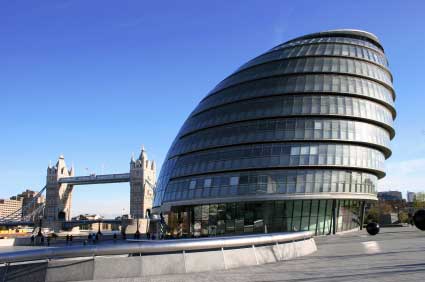
The London City Hall

The London City Hall houses the Mayor of London, the London Assembly and the Greater London Authority. The use of glass and a giant helical staircase in the interior are supposed to symbolise the transparency and the accessibility of the democratic process. What is most striking when looking from the outside, though, is the building's odd shape.
The London City Hall
The London City Hall on the river Thames.
Perched on the banks of the river Thames, the building is reminiscent of a river pebble, with its roundness again hinting at the democratic ideal. But as with the Gherkin, the shape was not only chosen for its looks, but also to maximise energy efficiency. One way of doing this is to minimise the surface area of the building, so that unwanted heat loss or gain can be prevented. As the mathematicians amongst you will know, of all solid shapes, the sphere has the least surface area compared to volume. This is why the London City Hall has a near-spherical shape.
The building's lopsidedness is also conducive to energy efficiency: the overhang on the South side ensures that windows here are shaded by the floor above, thus reducing the need for cooling in the summer. As with the Gherkin, computer modelling showed how air currents move through the building and the geometry within the building was chosen to maximise natural ventilation. In fact, the building does not require any cooling at all and reportedly uses only a quarter of the energy of comparable office spaces.
Even the helical staircase was not chosen for entirely aesthetic reasons. As part of their analysis, the SMG modelled the lobby's acoustics, quite appropriately for a building representing the voice of the people. Initially the acoustics were terrible with echoes bouncing around the large hall. Something was needed to break up the space. One of Foster + Partners' past projects provided a clue: the Reichstag in Berlin also contains a large hall, but in this case it is broken up by a large spiral ramp. The SMG created a model of a similar spiral staircase for the London City Hall and the company Arup Acoustics analysed the acoustics for this new model. As you can see in the animation below, sound is trapped behind the staircase and echoes are reduced, so the idea was adopted in the final design. (Animation © Arup Acoustics.)

Thursday, 2 February 2017

Math poems

Eleven Toes
(10 + 0)
Adding is fun,
It makes numbers grow!
I’d like to be adding,
A brand new big toe!
ten toes
Each day, I’d be counting,
11 cool toes,
I'm really hope-hoping,
Another toe grows!
Momma told me,
I can add 0 toes,
Not even 1 new one,
And momma, she knows...
Zero new toes,
Leaves me with 10,
But I'll wish for 11,
Again and again...