Friday, 27 January 2017


Puzzles


1.What number should replace the question mark?


Answer 
0.
Sol.
Looking at lines of numbers from the top : 9×8 = 72; 72×8 = 576; 576×8 = 4608;
2.What number should replace the question mark?

Ans: 17.Sol.
It is the sum of the two digits(9 + 8) in the quadrant opposite.

How Many Geometries Are There?

Just over 2000 years ago the Greek geometer Euclid laid down the foundations of geometry, and in doing so he made people aware of the idea that a mathematical statement needs to be proved. However convinced one might be about the truth of a statement, there is some possibility that one might be wrong, and so the only way to be certain is to give a proof.

Now if we are going to give proofs we must start somewhere; we cannot go on and on in a never ending attempt to justify what we are doing in terms of more and more basic mathematics. Euclid made the amazing step of realizing that mathematics needs axioms . An axiom is, roughly speaking, an agreed starting point which does not require proof; for example, we might agree that through any two points there is exactly one straight line, and that two lines meet in at most one point. In effect, what Euclid said was this: let us agree on some basic `facts', and let us also agree that from then on everything else must be proved. With this in mind he then laid down the axioms of what we now call Euclidean geometry, and then went on to develop this geometry to a very high level indeed. This is the geometry that we learn at school, and which we use if, for example, we want to make a plan of a house.
All seems well, but suppose that we don't agree with Euclid's axioms; then what? Well, first, it doesn't invalidate Euclid's arguments for all he is claiming is that if we agree with his axioms , then such and such will follow. We cannot dispute that, even if we prefer our own axioms! It follows then that someone else could come along and change his axioms, and they would then presumably end up with a different theory. Let us try this out.
Suppose that we want to navigate round the earth, and that, being a navigator, we want to calculate distances, angles, and so on, on the surface of the earth. This means that we have to do some geometry on the surface of a sphere, and it is clear that Euclid's geometry will not work there. What we have to do, then, is to change the axioms and/or invent a new geometry. Let us invent a new geometry.
The path of shortest distance between two points is an arc of a great circle. On the surface of the earth the lines of longitude and the equator are great circles but other lines of latitude are not because they do not have their centres at the centre of the earth. In view of this it now seems reasonable to call the great circles the lines of our new spherical geometry . How many of these lines are there through the two points located at the north and south poles? There are infinitely many, of course, for every line of longitude gives us such a great circle, so here is one of Euclid's axioms that already we have had no option but to change!
Consider the triangle on the sphere with the vertices placed (1) at the north pole, (2) the point where the equator meets the Greenwich meridian, and (3) the point on the equator with longitude 90 degrees. The arcs of the three great circles that join these points should be considered as a spherical triangle for it is made up of three segments of the straight lines in our new geometry. However, each angle of the triangle is 90 degrees, so now we have a triangle with an angle sum of 270 degrees (and not 180 degrees)! Another of Euclid's results has gone! We can go on and on in this way; for example any two great circles (or lines in our geometry) meet in {two points} and again, this is not so in Euclid's geometry.
If you want to find out more about spherical geometry you might like to read the article 'When the angles of a triangle don't add up to 180 degrees.'
We have, I suggest, reached the point where we must agree that there are at least two different geometries, namely Euclidean geometry and spherical geometry. They do not contradict each other, and neither is `right' or `wrong'; they simply represent a course of action advocated all those many years ago by Euclid, but with different starting points. What is surprising is that, considering the history of man's travels around the globe for so many years, it took us all so long after Euclid to realize that there are different, and equally valid, geometries.
So how should we answer the question in the title? Well, that is another, and very long, story but in the end there are very many geometries, each with its own peculiarities. Some are interesting and useful (for example, spherical geometry, and the curved space of Einstein's theory of relativity) and some are just curiosities. However, thanks to Euclid, who sadly never imagined such things, we know that they are all equally valid and each has a life of its own. I wonder where we would be now if the genius Euclid had been able to take this one extra step over 2000 years ago.
The artist M.C. Escher used the different geometries of the sphere the flat plane and the hyperbolic plane to give wonderful pictures. These are from The Magic of M.C. Escher, Thames and Hudson, 2000.

10 Ways We Use Math Everyday

Math is a part of our lives, whether we clean the house, make supper or mow the lawn. Wherever you go, whatever you do, you are using math daily without even realizing it. It just comes naturally.

Chatting on the cell phone

Chatting on the cell phone is the way of communicating for most people nowadays. It's easy, accessible and cost effective. Every one has a cell phone and it requires a basic knowledge of skill and math. You need to know numbers and how they work, and with today's technology you can do basically everything on your cell phone, from talking and faxing to surfing the Internet.

In the kitchen

Baking and cooking requires some mathematical skill as well. Every ingredient has to be measured and sometimes you need to multiply or divide to get the exact amount you need. Whatever you do in the kitchen requires math. Even just using the stove is basic math skills in action.
Gardening  :Even doing something as mundane as gardening requires a basic math skill. If you need to plant or sow new seeds or seedlings you need to make a row or count them out or even make holes. So even without thinking you are doing math. Measuring skills is always needed, and calculations of the essence when doing something new in the garden.

Arts

When doing any form of art you are using math. Whether you're a sculptor, a painter, a dancer or even just doing a collage for fun, you will need to be able to measure, count and apply basic math to it. Every form of art is co-dependant upon math skills.

Keeping a diary

Keeping a diary has become an essential part of our daily lives. We run from place to place and appointment to appointment. Making appointments and having a time schedule that works for you requires math. Without a diary we will crash and burn. Some people even have to make appointments to take some time out. Math is a much needed skill in today's life.

Planning an outing

Every outing you plan needs your math skill. Whether you go to the beach or the zoo is irrelevant. You will plan your way there and you will use your time wisely, math is your guide that will assist you and help you. When driving you need fuel, oil and water, without it your car will break down. All of these require math.

Banking

Can you imagine going to the bank and not having any idea what you need to do or how to manage your finances. This will cause a huge disaster in your life, and you will be bankrupt within hours.
Planning dinner parties :How about that inevitable dinner party or cocktail that you have to host. Planning is essential, how many guests are attending, what foods are you serving, the ambience of the place where you want to host it and so many other essentials all requiring multiplication, division and subtraction.

Decorating your home

Whether you are painting, doing the flooring or just acquiring new furniture, you need math to make your sums add up. Everything you do inside or outside of your home needs math skills. From accessories to a new swimming pool and putting in new lighting.

Statistics

Every basic thing we use in life consist of history. That means statistics. Taking into account the past and the future, and keeping record of what has been done. Without statistics we won't know what worked and what didn't. It helps us to find balance and structure.

Facts about Fibonacci series

History

Fibonacci was not the first to know about the sequence, it was known in India hundreds of years before!
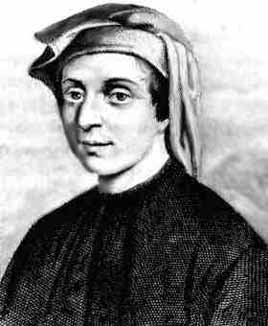
fibonacci portrait

About Fibonacci The Man

His real name was Leonardo Pisano Bogollo, and he lived between 1170 and 1250 in Italy.
"Fibonacci" was his nickname, which roughly means "Son of Bonacci".
As well as being famous for the Fibonacci Sequence, he helped spread Hindu-Arabic Numerals (like our present numbers 0,1,2,3,4,5,6,7,8,9) through Europe in place of Roman Numerals (I, II, III, IV, V, etc). That has saved us all a lot of trouble! Thank you Leonardo.
balloons

Fibonacci Day

Fibonacci Day is November 23rd, as it has the digits "1, 1, 2, 3" which is part of the sequence. So next Nov 23 let everyone know!

Divisibility Tests


Multiples of 2 and 5

The easiest divisibility tests are for 2 and 5. A number is divisible by 2 if its last digit is even, by 5 if its last digit is 0 or 5.
(In this article 'number' will always mean 'positive whole number')
These tests refer to 'digits' in the (usual) base 10 representation of the number, so that (for example) 2645 represents the number (5×1)+(4×10)+(6×100)+(2×1000). The tests for 2 and 5 work because the rest of the number (apart from the last digit) is a multiple of 10, and so is always divisible by 2 and 5. If the last digit is a multiple of 2 (or 5), then the whole number must be.

Multiples of 4 and 8

Since 1001000 and so on are multiples of 4, it follows (as for 2) that a number is divisible by 4if the number represented by its last two digits is a multiple of 4.
Example: 3728 is divisible by 4 because 28 is.
Powers of 10, from 1000 on, are divisible by 8, therefore it follows that a number is divisible by 8 if the number represented by its last three digits is a multiple of 8.
Example: 3728 is divisible by 8 because 728 is.
Note: if you think that you need a calculator to decide whether (for example) 728 is divisible by 8, then it will help you to learn the 8 times table and to practice some divisions which you can check on your calculator until you are confident that you can divide by 8 and don't need the calculator.

Multiples of 3 and 9

A slightly more complicated version of such reasoning gives rise to a test for divisibility by 3.
Now 10 is (3×3)+1, so (for example) 50 is (15×3)+5. To decide whether 57 is divisible by 3, we can take out the 15 lots of 3 in 57 and just check whether the remaining 5+7 is divisibly by 3: which it is, since 5+7=12.
Put slightly differently, we reason that 57=(a multiple of 3)+(5+7).
Therefore 57 is a multiple of 3 if and only if 12 is.
For 257, we note that 100 is (33×3)+1, so 200=(66×3)+2. We looked at 57 above.
Therefore 257=(a multiple of 3)+(2+5+7).
Once again, 257 is a multiple of 3 if and only if the sum of its digits is a multiple of 3.
Actually, that sum is 14, which is a multiple of 3 if and only if 1+4 is.
Since 5 is not a multiple of 3, neither is 257.
In general, 10=9+1100=99+11000=999+1 and so on:
every 'power' of 10 (like 10100100010000 and so on) is just 1 more than a multiple of 3, and so the method for divisibility can be applied to a number with any number of digits.
Example: is 1997 divisible by 3?
Now 1+9+9+7=26, and 2+6=8 which is not divisible by 3.
Therefore 1997 is not divisible by 3.
Note: in this example, we added the digits of 1997, then we added the digits of the answer, and so on, until we arrived at an answer with just one digit, sometimes called the 'digital root' of the original number. So we can say that a number is divisible by 3 if and only if its digital root is 36 or 9.
Because 10=9+1100=99+11000=999+1 and so on, we can see that every power of 10 is just 1 more than a multiple of 9, and so the method for divisibility by 3 actually transfers to 9 too: a number is divisible by 9 if and only if its digital root is 9.